Introduction
As autumn deepens, the days grow shorter and the nights longer. The air holds a certain crispness, and the trees shed their final leaves in a blaze of orange and gold. It’s in this turning point of the year that we enter Samhain (pronounced SOW-in), one of the eight Sabbats on the Wheel of the Year.
Often called the Witches’ New Year, Samhain is far more than Halloween’s mystical cousin. It is a time of endings and beginnings, of looking back in remembrance and looking forward with renewed intention. For centuries, people have gathered at this threshold of the seasons to honor ancestors, mark the final harvest, and acknowledge the cycle of death and rebirth that governs all life.
But what exactly is Samhain, and why does it still resonate so deeply today? To answer that, we need to travel back to its earliest roots.
Origins & History
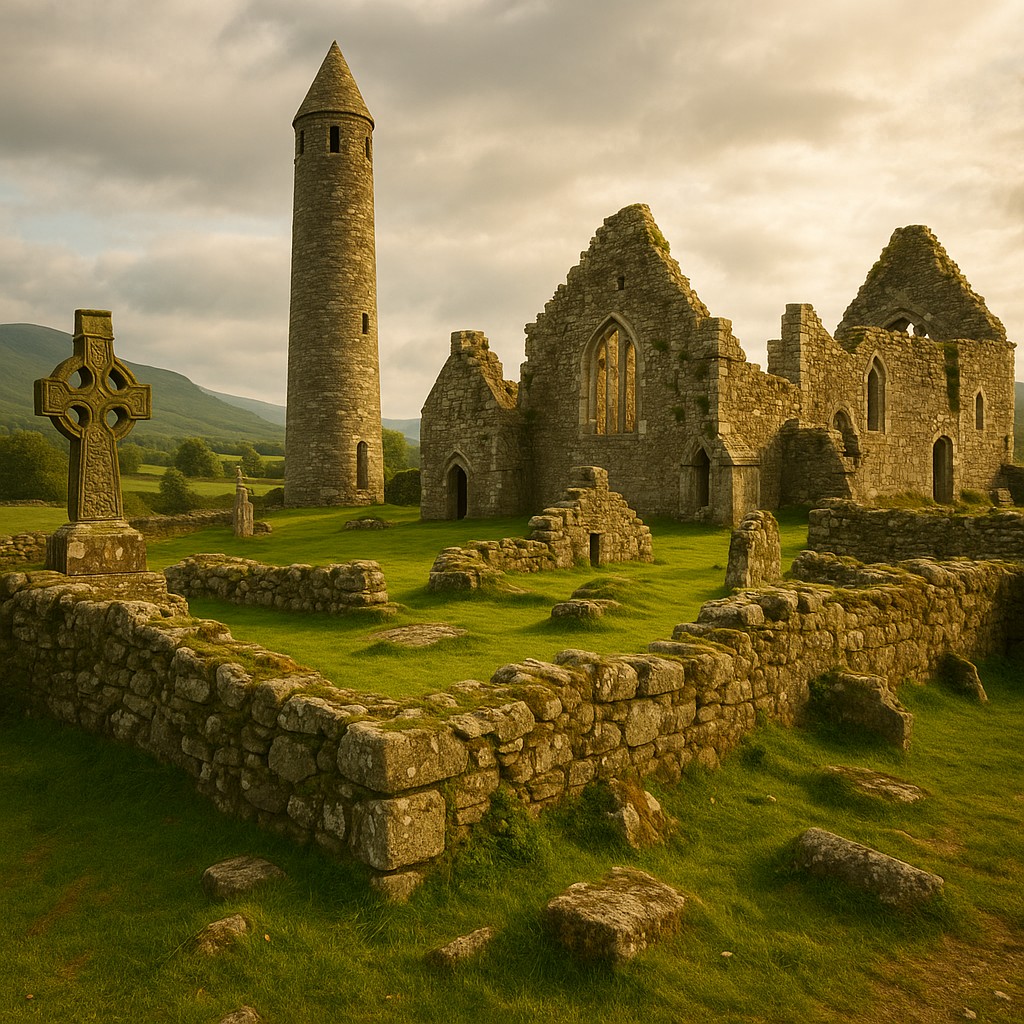
Samhain finds its origins in the ancient Celtic world, particularly among the peoples of Ireland, Scotland, and Wales. For these communities, the year was divided into two halves — the light and the dark. Samhain marked the end of the light half of the year (the growing season) and the beginning of the dark half (the time of rest, reflection, and survival through winter).
For farmers and herders, this was the time of the final harvest. Livestock were brought in from summer pastures, crops were gathered and stored, and preparations were made to endure the long, cold months ahead. What was not needed — or what could not survive the winter — was culled. In this sense, Samhain was both practical and profoundly symbolic: it represented necessary endings that made space for future beginnings.
Celtic lore tells us that Samhain was also a liminal time — a threshold moment when the boundary between the worlds of the living and the dead grew thin. It was believed that ancestors could cross over to visit, bringing guidance or blessings, while restless spirits also wandered more freely. To honor and protect themselves, families would leave offerings of food and drink, light bonfires to ward off ill will, and gather together in ritual and feast.
Some of these customs endured even as Christianity spread through Europe. The Church’s creation of All Saints’ Day (November 1st) and All Souls’ Day (November 2nd) echoed older practices of honoring the dead. The tradition of “souling” — giving out small cakes in exchange for prayers for departed souls — is one of the direct ancestors of today’s trick-or-treating.
Thus, Samhain stands as one of the oldest continuously remembered festivals in Europe. While its outer forms have changed, its heart — remembrance, renewal, and the acceptance of life’s cycles — continues to speak to us across centuries.
Seasonal Meaning
While Samhain began as an agricultural marker, its symbolism reaches far beyond farming cycles. It represents a universal truth: life moves in cycles of growth, decline, death, and renewal. Just as the fields lie fallow in winter and bloom again in spring, so too do our lives follow rhythms of release and rebirth.
🌗 Balance of Light and Dark
Samhain arrives at a time when the days have noticeably shortened. The long, sun-filled months of summer are behind us, and the hours of daylight wane as the nights stretch on. Symbolically, this is the season of shadow and introspection.
Rather than resisting the darkness, Samhain teaches us to embrace it as fertile ground. The dark is not a void to be feared, but a space where transformation happens — the seed buried in soil, the soul resting before rebirth, the wisdom found in stillness.
🌌 Death and Rebirth
Samhain is often described as a “doorway” Sabbat — a liminal moment when endings and beginnings blur. It closes the agricultural year, but it also serves as the spiritual new year for many witches and pagans.
This paradox makes Samhain uniquely powerful: it is both a time of mourning and of hope. We release what no longer serves us, honoring losses and goodbyes, while also planting intentions for the cycle to come. In this way, Samhain embodies the truth that death is not the end but a transition, a necessary step in the great spiral of life.
🕯️ The Witches’ New Year
Modern witches often call Samhain the New Year of the Craft. Unlike the secular new year in January — which focuses on resolutions and external goals — Samhain invites an inward turning. It asks us to reflect:
- What am I ready to let go of?
- What wisdom have I gathered from the year behind me?
- What seeds of transformation am I carrying into the year ahead?
This makes Samhain a deeply personal festival of renewal. It is less about fireworks and more about candlelight — not about making grand declarations, but about listening to the whispers of the soul.
🌿 Living the Energy of Samhain
Even today, Samhain’s meaning is relevant. In a world that often rushes past endings, Samhain gives us permission to pause, honor, and release. It reminds us that closure is not weakness but strength — that honoring the past creates space for a lighter future.
By aligning ourselves with the natural rhythm of release in the outer world, we find it easier to let go of inner burdens: outdated habits, heavy emotions, or limiting beliefs. The bare branches of the trees, the fallen leaves at our feet, the lengthening nights — all whisper the same message: “It is time to let go, so new life may come.”
Folklore & Symbolism
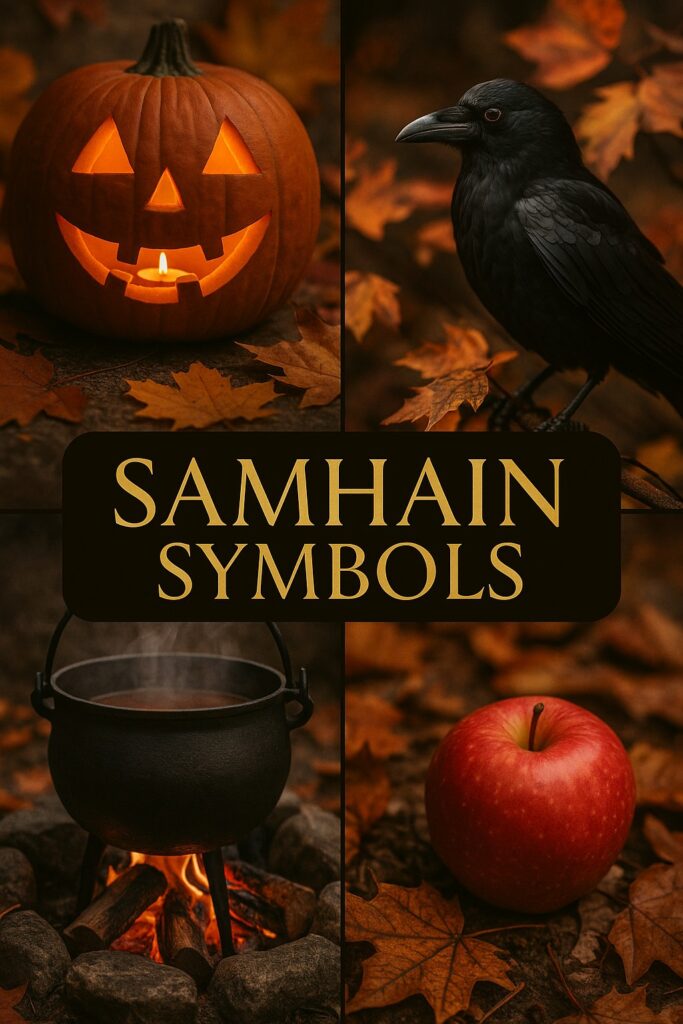
Samhain is one of the most symbolically rich Sabbats, layered with imagery that has carried forward for centuries. Many of the customs we recognize today in Halloween traditions began as folk practices tied to Samhain’s deeper spiritual themes.
🎃 Pumpkins, Gourds, and Turnips
Before pumpkins were popularized in North America, Celtic communities carved turnips and gourds into lanterns. Known as jack-o’-lanterns, these glowing faces were placed in windows and doorways to scare away wandering spirits. When the tradition crossed the Atlantic, the larger, softer pumpkin became the perfect canvas — giving us the symbol that defines the season today.
🍎 Apples and Divination
Apples have long been connected with Samhain, symbolizing immortality and prophecy. In Celtic lore, apples were linked to the Otherworld — the land of the dead and the divine. Traditional games like apple bobbing were not just playful but also used for divination: the first person to bite into an apple might be the next to marry, or the apple peel tossed over one’s shoulder might reveal the initial of a future love.
🔥 Bonfires and Cauldrons
Community bonfires were central to Samhain. Flames were thought to offer both protection and purification, burning away harmful spirits while lighting the path for ancestors. People carried embers home from the communal fire to rekindle their hearths for the new year.
The cauldron, often associated with witches, also has Samhain roots. It symbolizes the womb of transformation — where endings are broken down and rebirth begins.
🕯️ Candles and Lanterns
Lighting candles during Samhain was more than atmospheric. They acted as beacons for spirits — guiding ancestors home while keeping away mischief-making entities. Even today, lighting a single candle in a window honors this timeless practice of remembrance and protection.
🐈 Cats, Owls, and Ravens
Animals also carry symbolic weight at Samhain. Cats, often seen as guardians of the spirit world, were believed to sense and protect against unseen forces. Owls, with their night vision and eerie calls, symbolized wisdom and messages from beyond. Ravens and crows, perched between worlds, were seen as omens and messengers of the Otherworld.
🌌 Myths and Deities
Samhain is associated with deities who embody thresholds, endings, and transformation:
- The Cailleach – the Celtic hag goddess who rules winter’s descent.
- Hecate – a liminal goddess of crossroads, magic, and guiding souls.
- The Morrigan – linked with fate, prophecy, and sovereignty, often appearing as a crow.
These figures remind us that Samhain is not only about death, but about the wisdom and renewal that emerge from endings.
Why the Season Matters Today
Though centuries separate us from the Celts who first celebrated Samhain, the themes of the season remain timeless. We still experience the turning of the year, the deepening of the dark, and the call to honor both endings and beginnings.
🌌 Samhain as a Season, Not a Single Night
One of the most important shifts in modern practice is seeing Samhain as a season rather than a single night. While October 31st is the traditional date, the energy of Samhain flows for several weeks. The darkening skies, falling leaves, and harvest’s end create an atmosphere that lingers.
This perspective frees us from the pressure of “celebrating perfectly” on one night. Instead, we can honor Samhain slowly: lighting candles throughout the season, journaling in the longer evenings, or cooking autumnal meals with intention. In this way, Samhain becomes not just an event, but a rhythm woven into daily life.
🕯️ A Season of Reflection and Release
In our modern world, endings are often rushed past. We are encouraged to push forward, achieve more, and rarely pause to acknowledge what has ended. Samhain offers a counterbalance — a sacred pause to reflect, grieve, and release.
This may mean honoring loved ones who have passed, but it can also mean letting go of outdated habits, beliefs, or goals that no longer fit. By releasing, we create space for what is yet to come.
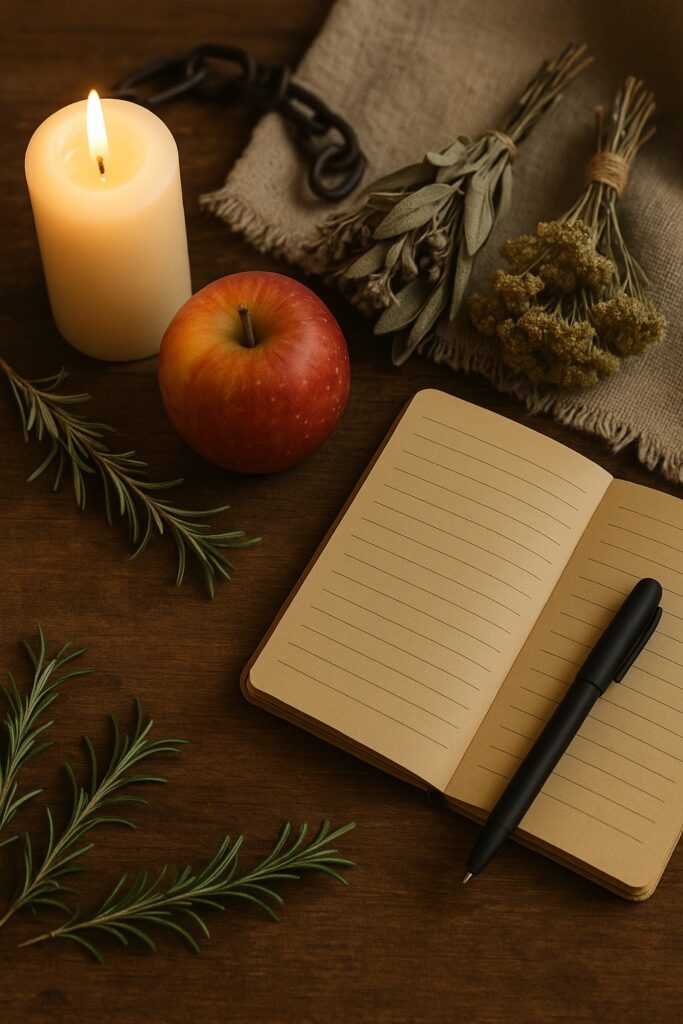
🌙 Shadow Work and Inner Growth
Because Samhain is linked to the thinning veil and the descent into darkness, it is a powerful time for shadow work — the practice of acknowledging and integrating the parts of ourselves we usually keep hidden. This is not about dwelling in fear, but about bringing compassion and light into those places.
Through journaling, meditation, or ritual, Samhain invites us to ask: What parts of myself need to be seen, healed, or transformed?
🌿 Gratitude and Renewal
Finally, Samhain is a season of gratitude. The harvest may be over, but it has given us the sustenance we need to survive winter. In the same way, we can look back at the year and give thanks for its lessons, both joyful and difficult. Gratitude at Samhain balances the work of release, reminding us that even in endings, there is abundance.
Conclusion
Samhain is not a relic of the past, nor simply a spooky holiday. It is a living, breathing season that invites us to honor our ancestors, embrace endings, and prepare for new beginnings. It teaches us to walk with both shadow and light, knowing that each has its place in the cycle of life.
As you step into this sacred season, consider what you are ready to release, what wisdom you carry forward, and how you might invite renewal into your life.
✨ If you’d like more guidance, rituals, and practices for Samhain, I’ve created a free Simple Samhain Mini Guide — your companion to this powerful season.
👉 Sign up here to grab your copy and start celebrating Samhain with confidence.
Blessings of Samhain,
Sandy